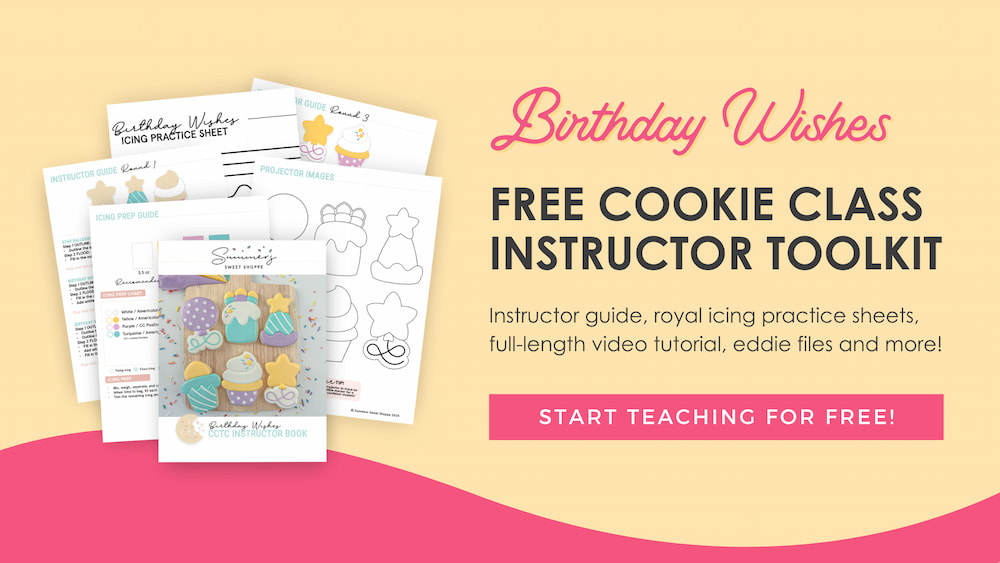

Have you ever taught (or thought about teaching) a cookie class and felt those butterflies before you even set out the piping bags? Worried you’ll forget what to say, which cookie to start with, or that you’ll look less-than-professional if something goes sideways? Same. When I first started, my class-day nerves were high. I’d be double-checking boxes, imagining every possible disaster (did I pack the scribes?!), and by the time students arrived, I was frazzled.
Here’s the good news: confidence isn’t something you’re born with—it’s something you build. Once I stopped winging it and started using simple, repeatable systems, everything changed. I walked in calmly. My setup looked polished. And most importantly, my students felt taken care of.
The shift that changed everything
I used to believe: “If I just bring more—more techniques, more colors, more cookies—students will get more value.” Reality check: overwhelm helps no one. The magic happens when you simplify: your designs, your prep, your setup, your instructions. When you teach less, students actually learn more. They have fun, they succeed, and they come back.
Below are the three moves that built my confidence fast—and will build yours, too.
1) Set the tone with a solid setup
Your table is your silent first impression. When students walk in and see tidy stations, tools ready, and a warm, welcoming vibe, they relax—and so do you. Arrive early, lay everything out with intention, and create a little atmosphere (music low, name cards if you have them). A calm room signals, “You’re in good hands.”
2) Lead with clarity (hello, checklist + flow)
Confidence comes from clarity. I don’t rely on memory—ever. I use a cookie class checklist (yes, printed!) so nothing gets left behind—scribes, stickers, boxes, all of it. I also map the class flow in advance: which cookie we start with, when we pause, and how we build layers within the time window. When you know the order, you can be present with your students instead of thinking, “Wait…what’s next?”
Pro tip: Keep designs achievable within 90–120 minutes, limit icing colors, and plan for dry time so you’re never rushing.
3) Use visuals to guide (and save your brain power)
Even if you “know it all,” class nerves can make maple-syrup consistency suddenly vanish from your vocabulary. I use light visuals—slide prompts, printed step-by-steps, or a simple run-of-show card at each station. It keeps everyone on track, reduces hand-raising for “what’s next?” and frees you up to coach, encourage, and celebrate wins.
Here’s the truth I see every week inside Cookie Classes to Cash: cookiers go from stressed and second-guessing to polished and professional, not by chasing perfection, but by following a clear plan. Students feel it, too—they trust you, enjoy the experience, and come back for more.